








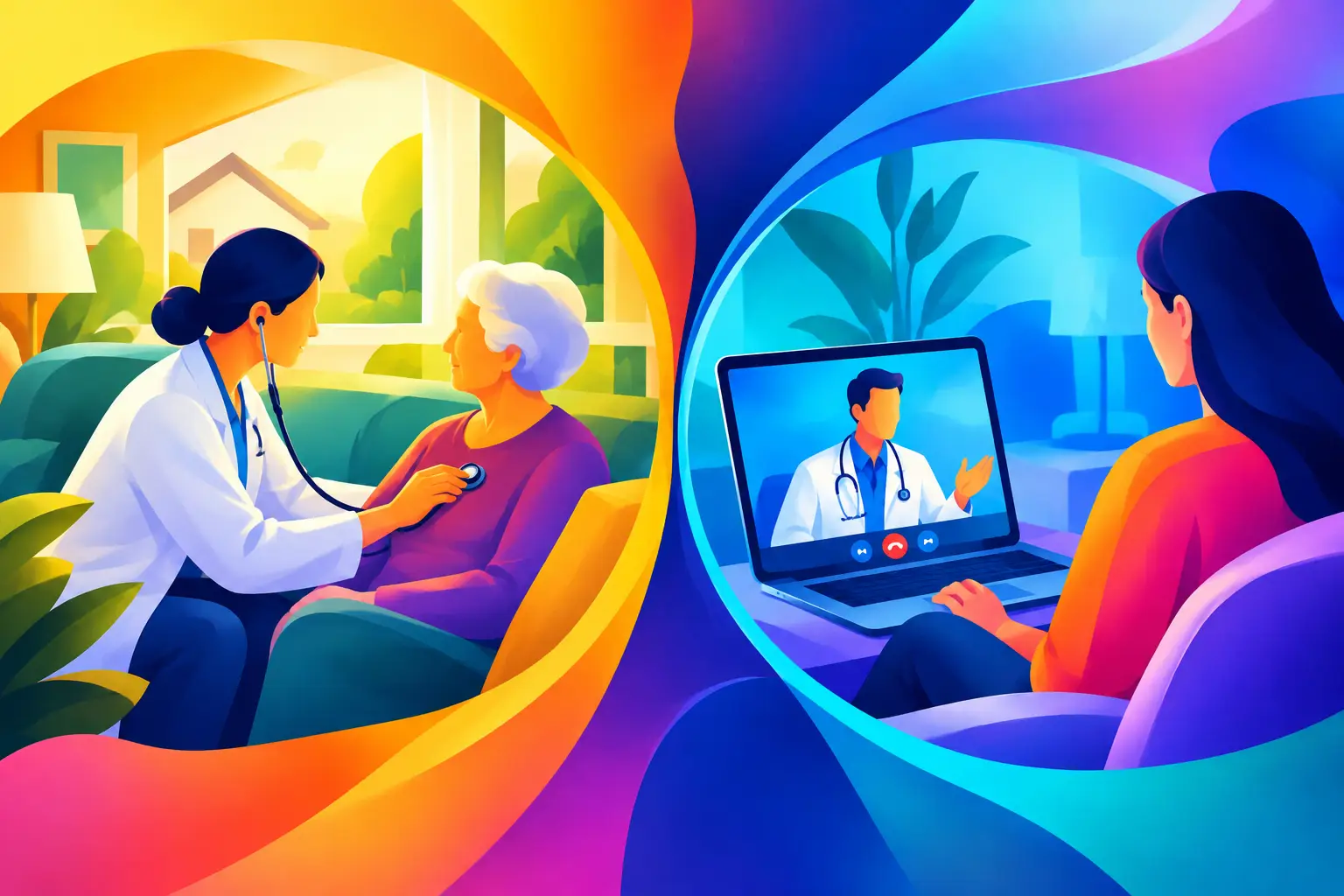
A fever at midnight in a Milan hotel, a child with vomiting in a rented flat, or a prescription that cannot wait until tomorrow creates the same question: home visit versus video doctor – which is the right choice? The best answer depends less on convenience alone and more on what the doctor needs to assess, how unwell the patient is, and whether you need treatment or documents immediately.
For English-speaking visitors, students and residents, the priority is usually clear communication and a decisive next step. Both formats can provide that. The difference is how much examination is needed before a doctor can safely make a plan.
Home visit versus video doctor: the main difference
A video consultation puts you in front of an English-speaking doctor quickly, wherever you are in Milan. It is often the fastest route for advice, symptom assessment, prescriptions where clinically appropriate, treatment guidance, sick notes and medical certificates. You avoid travel, waiting rooms and the difficulty of explaining your concern in a language you do not speak confidently.
A home visit brings a dedicated doctor to your hotel, home or workplace. This allows for a hands-on assessment: observing how a patient looks and moves, examining the throat, ears, chest or abdomen where appropriate, checking vital signs, and speaking with family members in person. For someone who is too uncomfortable, exhausted or unwell to travel, that reassurance can be worth far more than the convenience.
Neither option is automatically better. Video care is highly effective when the medical history and visible symptoms provide enough information for a safe decision. A home visit is the stronger option when the physical examination may change the diagnosis or treatment plan.
When a video doctor is usually the practical choice
A video consultation can be an excellent first step for many common, non-emergency concerns. It is particularly useful when you need clear advice quickly but do not necessarily need a physical examination straight away.
For example, a doctor may be able to assess cold and flu symptoms, mild gastroenteritis, a simple skin complaint, hay fever, travel-related medication queries, minor eye irritation, contraception questions or an ongoing condition that has flared up. It can also help when you need guidance on whether your symptoms can be managed with rest and pharmacy treatment, whether you need an in-person review, or whether you should seek urgent hospital care.
Video consultations are also helpful for practical medical needs. If you require a medical certificate for an employer, university, airline or travel insurance claim, a doctor can explain what documentation is clinically appropriate and arrange it when suitable. The same applies to prescription requests, provided the doctor can prescribe safely based on your symptoms, history and any relevant medical information.
This format suits busy professionals between meetings, travellers who do not want to leave their accommodation, and parents who first want to discuss a child’s symptoms before arranging a visit. It is private, direct and often the quickest way to replace uncertainty with a clear plan.
There are limits, however. A camera cannot listen to a chest, feel an abdomen, inspect an ear canal or take reliable observations. Good video care includes knowing when the consultation should become a home visit, clinic appointment or emergency referral.
When a doctor home visit gives you more certainty
Choose a home visit when symptoms suggest that an in-person assessment could make a meaningful difference. This is often the case with high or persistent fever, worsening cough, suspected chest infection, severe sore throat, ear pain, abdominal pain, dehydration, a painful rash, urinary symptoms with systemic illness, or a condition that has not improved as expected.
For children, an in-person review can be especially reassuring. Parents may be able to describe a fever accurately, but a doctor seeing the child’s breathing, hydration, alertness, skin colour and general behaviour has a fuller clinical picture. A home visit also removes the strain of taking an ill child across the city or waiting in an unfamiliar setting.
Older patients, people recovering from surgery, and anyone whose mobility is limited may also benefit from a doctor coming to them. The same is true for travellers feeling too unwell to leave a hotel room. Care begins in the place where you already feel safest, with time to ask questions without rushing through a crowded reception area.
A home visit is not merely a premium convenience. It can provide the physical examination needed to make a more confident decision. Depending on the assessment, the doctor may recommend medication, a treatment plan, further tests, specialist care, hospital assessment or close follow-up.
The decision is often about what happens next
Many patients focus on the first contact: screen or doorstep. The more useful question is what you need the doctor to do after listening to your symptoms.
If you need reassurance, practical advice and a safe plan for a straightforward issue, video care may resolve the matter efficiently. If you need a physical examination, immediate hands-on assessment or closer observation, a home visit may save time and uncertainty.
Consider a video doctor if you can describe your symptoms clearly, are comfortable speaking on camera, and your condition appears mild or stable. Consider a home visit if pain is significant, symptoms are progressing, the patient is a young child or frail adult, or you feel that something is not right despite having tried basic treatment.
For four situations, do not wait for either format as your only plan:
- difficulty breathing, blue or grey lips, severe chest pain or sudden confusion;
- signs of stroke, such as facial weakness, arm weakness or new speech difficulty;
- severe allergic reaction, including swelling of the face or throat;
- heavy bleeding, collapse, a seizure, or severe pain following a serious injury.
These can be emergencies. Call the local emergency services immediately or go to the nearest emergency department. A private doctor can guide many urgent concerns, but emergency hospital care is essential when rapid life-saving treatment may be needed.
What to expect from the right private medical service
When you are away from your usual GP, speed matters, but clarity matters just as much. You should know who you are speaking with, what the doctor can assess remotely, when an in-person review is recommended, and what happens if your symptoms change.
A high-quality service should make the booking process simple, including short-notice appointments by phone, WhatsApp or online. It should explain costs before care begins, protect your privacy, and provide a clear record of the consultation where needed. For international patients, English-speaking support is not an extra – it is central to safe care. You should be able to explain allergies, existing conditions and medication without guessing at the right Italian words.
The consultation should end with practical next steps. That may mean a prescription, advice on what to buy from a pharmacy, a medical certificate, instructions for monitoring symptoms, or a follow-up check. If you need to move from video to a home visit, the transition should feel coordinated rather than like starting again with a new clinician.
InfinityDoc is designed around that concierge approach: immediate access to English-speaking doctors in Milan, with online consultations, clinic appointments and doctor home visits available according to your needs. There is no subscription requirement, which is particularly useful when you are in the city for only a few days and need help now.
A quick way to choose without second-guessing yourself
Start with one honest question: would you feel comfortable managing this issue based on a doctor seeing and speaking to you through a screen? If yes, a video consultation may be the fastest, most proportionate choice. It can give you medical direction without disrupting your day, and the doctor can advise if an examination becomes necessary.
If your answer is no – perhaps because the patient looks distinctly unwell, you need a chest or abdominal examination, or leaving your accommodation feels unrealistic – request a home visit. You are not being overcautious by choosing an assessment that gives the doctor more clinical information.
The right format is the one that turns concern into a safe, understood plan. Whether that begins with a screen or a doctor at your door, seek care early enough to give yourself options – especially when you are far from home and need someone to guide you every step of the way.




